Published June 8, 2026
Choosing the Right Lecture Summary for Your Audience
Not every reader needs the same kind of lecture notes. Some want a quick version, some need bullet points, some need the big picture, and others want something they can study again later.
Bismillah,
Very often, the lecture itself is not the issue. The way we package the notes does not always match what the reader actually needs.
A WhatsApp group admin may need something fast to read. A mosque committee may only want the main takeaway for an announcement or internal recap. A serious student may want a summary that still follows the teaching flow so it can be reviewed again later.
If everyone gets the exact same output, some people will still benefit, but others may feel it is too long, too thin, or simply not practical to use.
That is why a useful summary does more than shorten the original. It fits the purpose it is meant to serve.
One Lecture, Different Jobs
Think about a single lecture recording after it has been processed. You may want to use it in several places:
- In a fast-moving community chat.
- As source material for a content team.
- As a quick briefing for mosque leaders or organizers.
- As notes for students who want to revisit the lesson later.
All of those needs are valid. But they clearly do not all need the same kind of summary.
That is where the alternative summary feature becomes practical. It lets you choose the output that makes the most sense for each situation.
When You Need Something Fast
Sometimes the only question is: “What is this lecture mainly about?”
That is where a concise summary helps most. It works well when:
- You want to share the core message in a group without asking people to read a long text.
- You need a quick preview before deciding whether to publish or repurpose the material.
- You are organizing many lectures and want something easy to scan later.
Readers do not always need every layer. Very often, they just need direction, the main message, and a few points worth remembering.
When You Want Something Easy to Reuse
There are also moments when you need notes that are easy to break apart and reuse across different channels. In those cases, clean points work better than long paragraphs.
That is where a bullet-point summary becomes useful. It fits when:
- A social media team wants to turn a lecture into slides or captions.
- You want to share point by point in a study group.
- Your readers prefer to scan quickly instead of reading a full article.
This format makes it easier for people to catch the message without feeling like they are opening a full-length piece.
When You Only Need the Big Picture
Not everyone comes to a summary to study details. Some people only need to understand the direction of the lecture, why it matters, and what the practical takeaway is.
In that case, an executive summary is often the better choice. It works well for:
- Mosque organizers who need the essence quickly.
- Internal teams deciding which lectures to prioritize for publication.
- Anyone who needs the bigger point without reading every detail.
This format is useful when the reader has limited time but still needs enough clarity to make a decision.
When You Want Notes Worth Studying Again
Some lectures are not just for sharing today. They need to stay useful next week, next month, and next year.
That is where a structured informative summary becomes the stronger option. It works well for:
- Students who want to review the lesson in a clear flow.
- Da’wah teams building a useful archive, not just a storage folder.
- Writers or editors who need a strong base before turning the lecture into a longer article.
This is about preserving the shape of the lesson so the notes still feel alive and usable, not just shorter.
Start with the Reader, Not the Format
The safest way to choose does not start with, “Which one is the most complete?”
A better set of questions is:
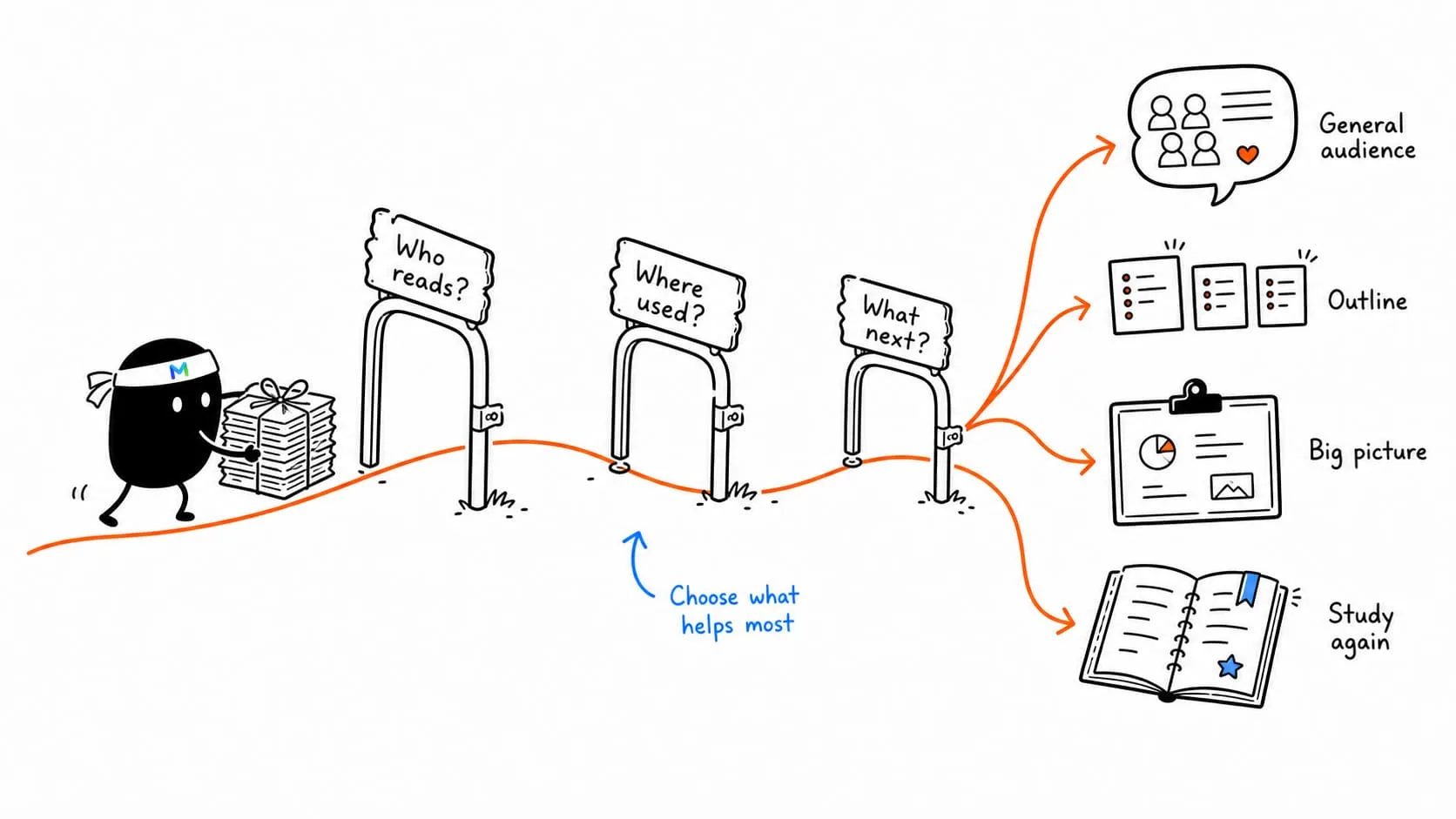
- Who is going to read this?
- Where will they read it?
- What do I want them to do after reading?
If the audience is a general community chat, too much detail may cause the message to be skipped. If the audience is a content team, an overly compressed version may be harder to repurpose. If the audience is a student, a very thin summary may not be enough for review.
So the goal is to choose the format that is most useful for the job in front of you, rather than search for one option that wins in every situation.
The Right Summary Helps Knowledge Travel Further
Sometimes the biggest improvement comes from presenting the same content in the form people can actually use.
The same lecture can feel heavy in the wrong format and immediately helpful in the right one.
That is why summary choice matters. It helps knowledge reach the people who need it in a form they are more likely to read, save, and share.
Start with the Use Case You See Most Often
You do not need to use every format on day one.
Start with a simple question:
What does your team need most often right now?
- A quick version?
- Shareable bullet points?
- A high-level summary for leaders?
- Or notes that still work for deeper review?
Once you know that, choosing the summary style becomes much easier.
And when the format fits, a lecture stops being just a recording or a transcript. It becomes something people actually use.
Build summaries from reviewed text. See which details still need human judgment after AI transcription.